.jpg)
Published April 5, 2025
What to Expect from the Market When Selling a Larger Home

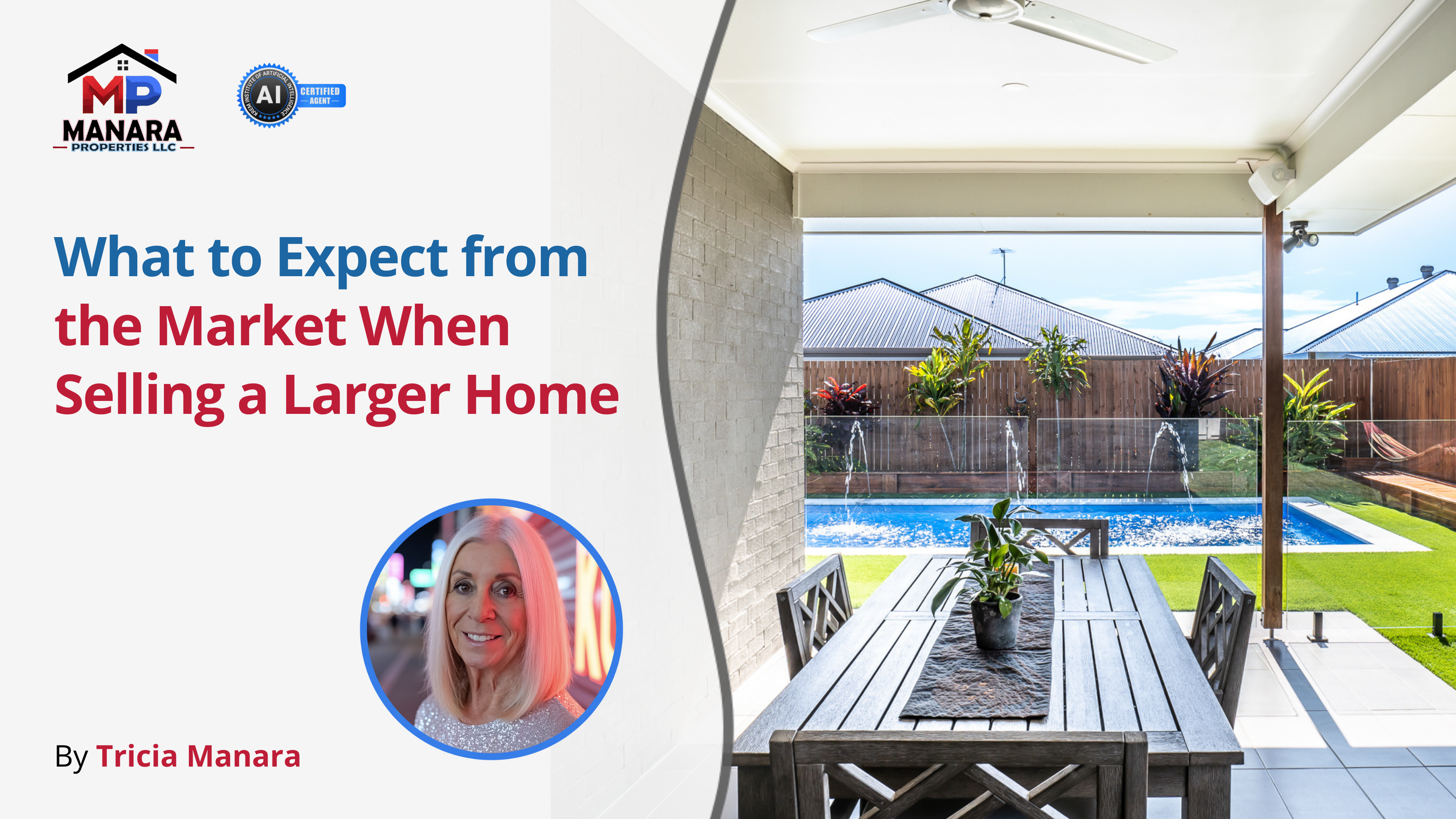
Selling a Big Home? Here’s the Scoop on Today’s Market
So, you’re planning to sell your larger home—maybe the kids have moved out, or it’s just time for a fresh start. While bigger homes come with more space and value, selling one isn’t always as straightforward as a smaller property. What can you expect from the market? Let’s break it down.
Market Demand for Larger Homes Is Different
Bigger homes typically attract a smaller, more specific pool of buyers. Families needing extra bedrooms, people looking for home office space, or buyers wanting luxury features often lead the way.
However, the demand for large homes can vary depending on the economy and local trends. In slower markets, buyers may be hesitant to take on higher utility bills, maintenance costs, and property taxes associated with large homes.
Pricing Can Be Tricky
Setting the right price is key—especially with larger properties. These homes can take longer to sell if priced too high. On the flip side, undervaluing your home might cost you thousands.
💡 Tip: Work with a real estate agent who knows your neighborhood and has experience selling bigger homes. They’ll help you price it competitively while highlighting its best features.
Staging Matters More Than You Think
Large homes can sometimes feel too big to potential buyers, especially if rooms are empty or cluttered. Strategic staging helps highlight how each space can be used—turn that extra bedroom into a home office, gym, or cozy guest suite.
✨ Pro Tip: Focus on comfort and purpose. Buyers should be able to picture themselves living and thriving in the space.
Marketing a Large Home Takes a Different Approach
Your average listing description won’t cut it here. Selling a bigger home often means using professional photography, video tours, drone shots, and even virtual staging. These visuals showcase the space in its best light.
Also, marketing needs to reach the right audience—potential buyers for large homes aren’t always local. Consider digital ads targeting out-of-town buyers, remote workers, or people looking to relocate to your area.
Timing Can Impact Your Sale
Just like smaller homes, market timing matters. But with larger homes, the selling window might be narrower. Buyers for big properties often plan well ahead—they may be relocating for work or thinking about school districts.
🕰️ Spring and early summer are often the best seasons to list, but talk to your agent about local trends.
Inspections and Appraisals May Be More Complex
Larger homes usually have more systems and features—think swimming pools, extra HVAC units, and expansive roofs. That means longer home inspections and detailed appraisals. Be prepared for that process to take time, and fix any known issues before listing.
Expect Longer Days on Market
It’s not uncommon for large homes to sit on the market longer than average-sized ones. But don’t panic—this is normal. The right buyer will come, especially if your home is well-presented and priced correctly.
📈 Want to speed things up? Offer buyer incentives like covering closing costs or including high-end appliances.
Selling Your Larger Home Can Be a Smart Move
Whether you're downsizing, simplifying, or relocating, selling your larger home can be a great financial and lifestyle decision. The key is knowing what to expect, preparing your home properly, and working with an expert who knows how to market it.
Got a big home you're thinking of selling?
Let’s chat! Our experienced agents are here to help you get top dollar with the least hassle. Contact us today for a free home valuation and custom selling strategy.
Would you like a checklist or guide to pair with this blog for sellers of large homes?
|


or another way