.jpg)
Published October 31, 2025
What Urban Development Means for Mesa’s Neighborhoods

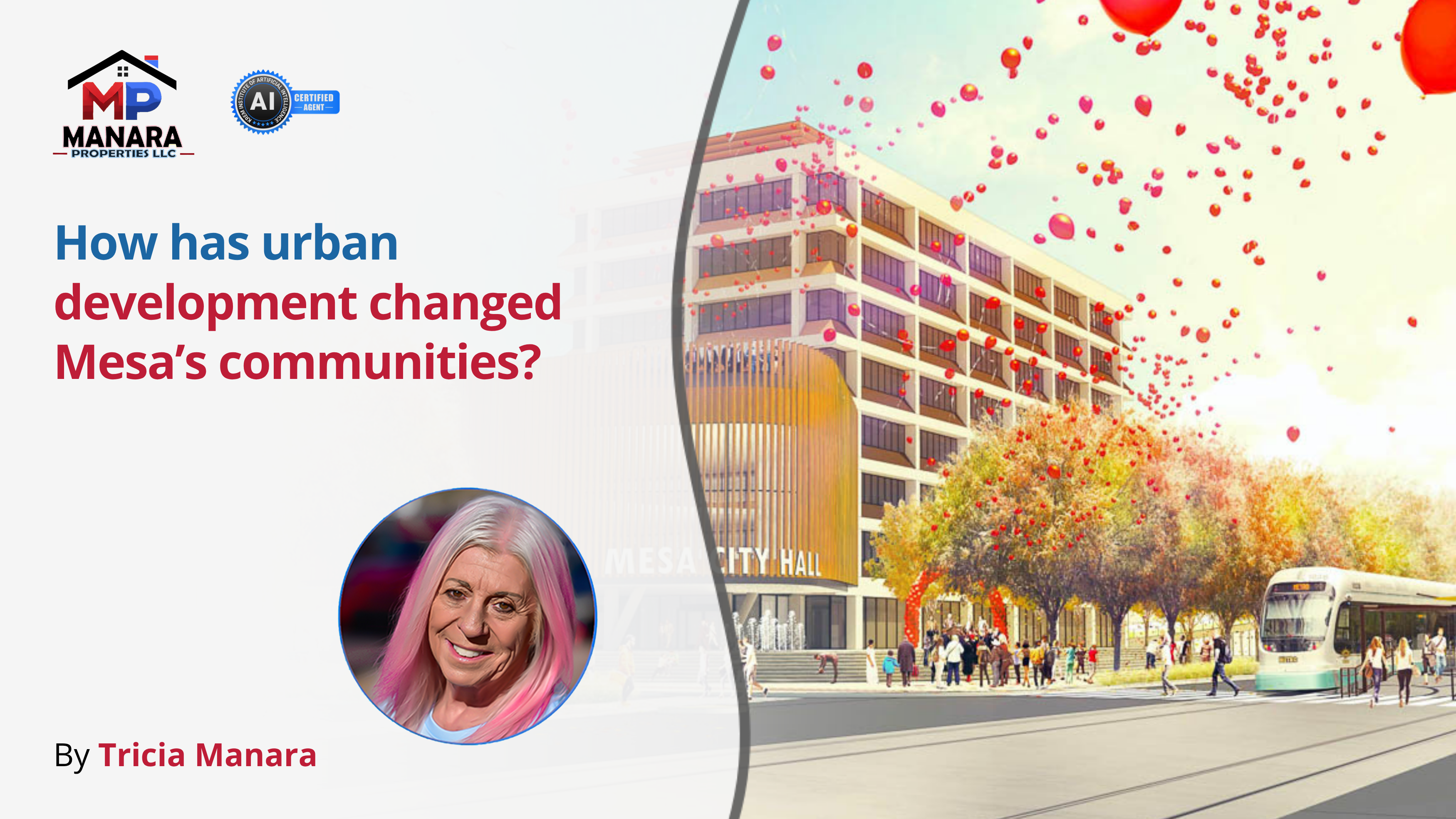
Mesa Is Growing — But What Does That Mean for Its Communities?
Mesa, Arizona isn’t just expanding — it’s transforming. With new housing, transit systems, and revitalized downtown areas, Mesa’s urban development has created big shifts in how people live, work, and move through the city. But what do these changes really mean for the people who call Mesa home? Let’s break it down.
Revitalized Downtown and Public Spaces
Mesa’s downtown is no longer just a quiet stretch of historic buildings. Thanks to city planning and investment, it’s now filled with walkable streets, cultural spots, new restaurants, and mixed-use developments.
Infill development is filling empty lots with townhomes and apartments.
New parks and public spaces are encouraging more foot traffic and local events.
Projects like Mesa Arts Center and ASU’s new building are attracting younger crowds and students.
What’s changed?
More life, more traffic, and a faster pace — downtown now feels like a hub instead of a pass-through.
Housing Density and Neighborhood Infill
To meet growing demand, Mesa is moving away from just building suburbs. Instead, the city is focusing on infill development and higher-density housing, especially near transit corridors.
Townhomes and apartments are being added to older single-family areas.
“Missing middle” housing helps provide options for young professionals, students, and downsizing seniors.
These projects often come with upgraded sidewalks, lighting, and landscaping.
How does this affect residents?
Some enjoy the added energy and walkability, while others feel concerned about losing the low-density, quiet charm they once had.
Transit-Oriented Growth and Connectivity
Mesa’s light rail expansion and MesaCONNECTED plan are transforming how people get around.
Transit corridors now support shops, housing, and workspaces.
Residents can live closer to work, school, or entertainment — and skip the long drive.
Streets are being upgraded for bikes, walking, and accessibility.
Result?
Greater mobility and access, especially for those without cars — but also increased traffic and demand for parking in some areas.
Economic Development and Local Business Boost
New construction and planning bring more than just buildings — they create new customers and new energy.
Small businesses in revitalized areas see a rise in foot traffic.
Property values in newly developed zones are rising.
New jobs in construction, retail, education, and services are following the growth.
However, some long-time businesses may struggle to keep up with rent or changing demographics.
Shifting Social and Cultural Dynamics
With new housing comes new people. Mesa’s communities are becoming more diverse, both economically and culturally.
Areas like the Asian District highlight how culture and commerce can thrive with the right support.
Younger residents and transplants bring fresh energy but also shift the local identity.
More events, local art, and food scenes reflect a broader, more inclusive Mesa.
What’s the impact?
New experiences and cultural connections — but a learning curve for residents adjusting to the pace and change.
|


or another way